
Week 1: Placement and muscularity
Hello and welcome to American Reshape! I’m so happy you’re here.
If you don’t know me yet, hi! I’m Holly. I’ve been working as an accent coach, actor, voice performer, and director for as long as I can remember. I coached my first professional production at just 17 years of age, and I haven’t looked back in the 23 years since.
What you’re about to do is not your typical Accent Reduction course. The way I work is a tried-and-tested method developed over these past two decades, incorporating voice and actor training, neuroscience, linguistics, language skills, and much more. It’s physical, practical, effective, fun, and I think you’re going to love it. It has worked on Academy award nominees, students, public speakers, and everyone in between. It can work for you too.
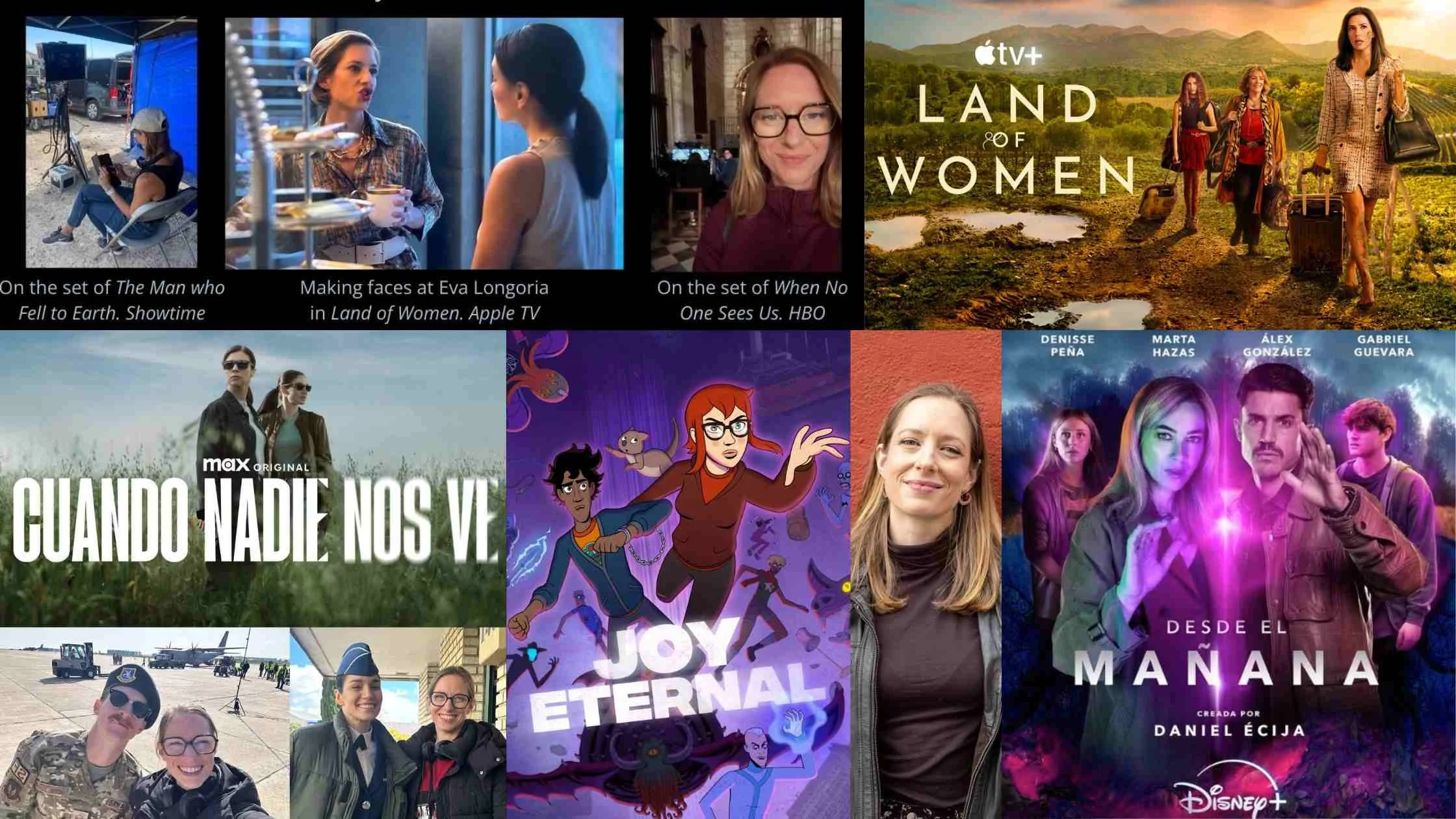
What you’ll need:
As we reshape your speech over the next 4 weeks (or longer if you’d like to work at a slower pace), there are a few things you’ll need:
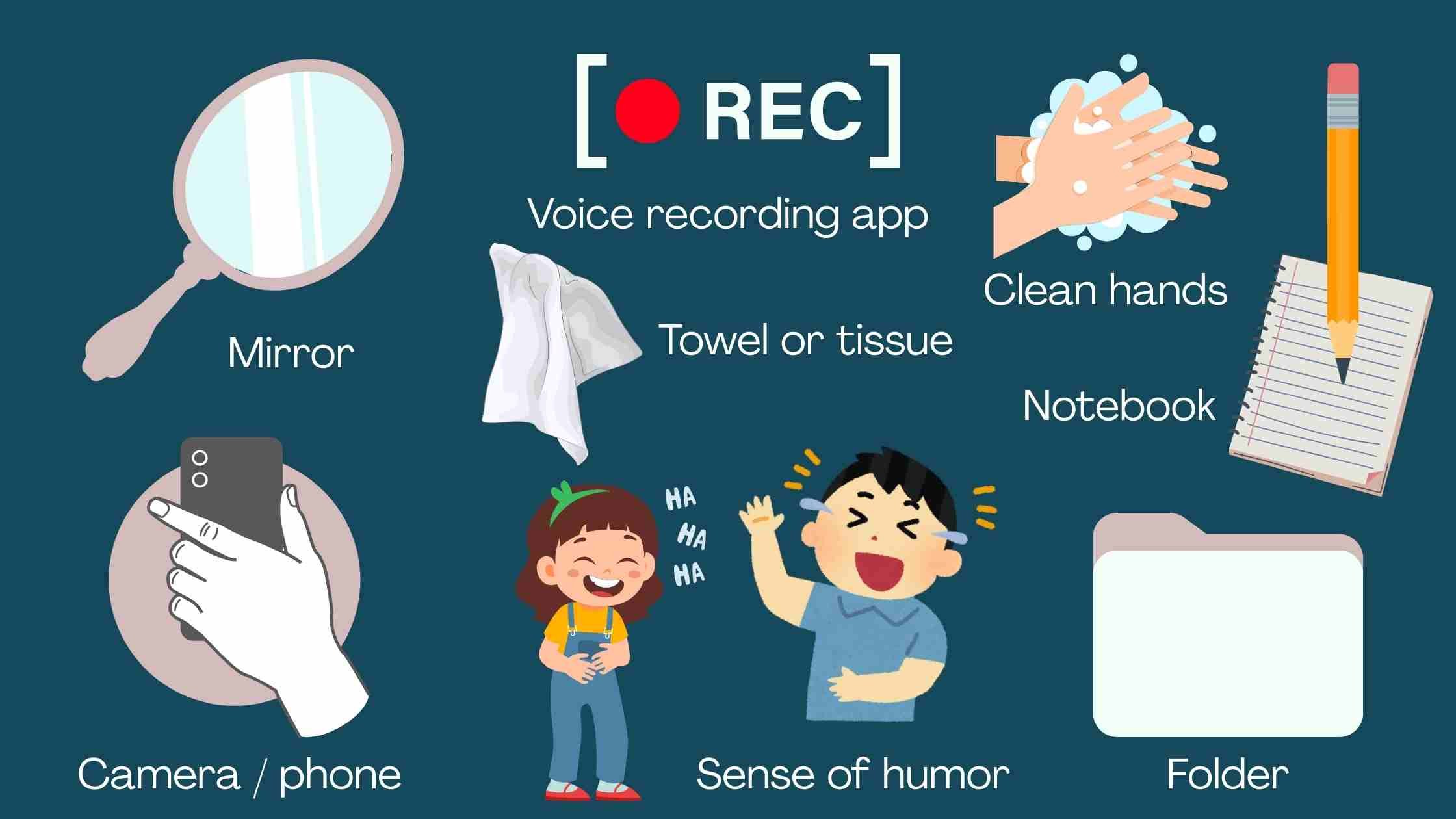
A mirror. You’ll be looking at your mouth a whole lot.
A notebook and pen/pencil to write all your observations down, and keep track of what works for you
A recording app on your phone or other device. There are many free ones available, and any will do. Just search “voice recorder.”
Clean hands- we’ll be touching all parts of our mouths, so always give your hands a good wash before each class.
A tissue or towel nearby- because things can get a little slobbery!
A folder to save all of your pdfs in.
A phone or camera to record video of yourself.
A sense of humor! Like I said, this is a physical and practical way of working. Do not expect to just sit and watch a class and then have your accent magically snap into American. We’ve got work to do! But it doesn’t have to be super serious, so expect to laugh a lot.
What results can you expect?
This depends on two main things: 1- where you’re starting from, and 2- how much you put into it this month.
For example- if you are starting from a place of “People never seem to understand me. I get a lot of blank stares and am asked to repeat myself a lot.” in just one month, you’re not likely to sound 100% like a native speaker. BUT, you will likely have NO issues whatsoever being understood. Your speech will feel easier, fluid and fluent, clear, and your confidence will get a major boost.
If you want to notice a big difference, no matter where you’re starting from it’s going to take consistency and dedication. Accents are muscular, so just like you can’t expect to go to the gym for one week and then be “in shape”, you can’t expect to do some mouth exercises once and then SHAZAM! You’re American.
That’s not how this works.
But if you follow each day, doing each step with attention, awareness, and curiosity, and you follow ever single step as we go through the month, you will notice massive changes in how you speak. If you’re doing the work, the results will follow.
OK! That’s all the admin out of the way. Let’s jump in!
Week 1: The Neuroscience of speech
This week is all about making your mouth an “American mouth.”
Does that mean all American mouths are the same? Of course not. No two bodies are the same. But there are some patterns and similarities that we need to aim for if English is not our first language.
We’ll be approaching things from a very physical standpoint, and activating our brains in a new way….
WAIT? It’s not new at all! It’s actually one of the first things you figured out about speech when you were muuuuch younger. There’s a reason this week is mainly visual and physical. And skipping this part is largely why people don’t end up shifting their accent. Focussing on sound alone Simply. Doesn’t. Work.
How does speech work?
In order to understand why we’re going to approach our accent in this (slightly strange but effective) way, it’s helpful to pause and look at how we even speak to begin with. In speech production. the brain sends coordinated signals to groups of muscles involved in articulation, which include the tongue, lips, jaw, vocal cords, and diaphragm. Your mouth is programmed in groups of muscle activation according to the sounds of your native language(s), and my job this week is to help you re-wire those circuits to give your mouth more options.
Here are the (very!) basics of how speech works.
Imagine you want to say the word DOG
Concept Formation:
You start by forming the idea of "dog" in your prefrontal cortex, the area responsible for planning and decision-making. Here, your brain identifies the concept it wants to express: a dog.
Word Selection:
The Wernicke’s area in the left hemisphere helps retrieve the correct word "dog" from memory. This area is responsible for language comprehension and plays a key role in finding words to match your thought.
Motor Planning:
The word "dog" now travels to Broca's area, located in the frontal lobe. This region organizes the motor plan for "dog", deciding which muscles need to activate to produce each sound ("d," "o," and "g"). This planning includes coordinating the breath, vocal chords, articulators, facial expressions... everything.
Signal Transmission:
The motor plan is sent to the primary motor cortex, which sends signals through nerves to the muscles Broca wants to use.
Muscle Activation:
Motor neurons activate specific muscles in the lips, tongue, vocal cords, and diaphragm. These muscles work together to produce the sounds "d," "o," and "g" in the correct order and with the right timing and tone to communicate all that "dog" means to you in that moment.
Auditory Feedback:
As you say "dog," the auditory cortex in your brain processes the sound of your own voice. If it detects anything off, you can make adjustments to improve clarity or accuracy.
This whole process—from thought to saying the word—takes just milliseconds. The process of building "muscle memory" is really activating alternative muscle groups (step 5), AND getting used to how you sound while doing it so that you don't accidentally "fix" it to sound like your native language (step 6!).
What we’re actually doing this month is creating new neural pathways in order to activate new groups of muscles.
BEFORE WE BEGIN: Grab your phone, and record a video of you talking. Talk about how your day has been, words that are hard to say, things you often talk about at work… anything at all. You’ll want a reference at the end to see how far you’ve come! Once you’ve done that, come back.
Observation
It should come as no surprise then that today we’re going to focus on our observation and awareness when it comes to both our own speech, and that of other people. Here’s what you need to do:
Close your eyes, and speak out loud in your first language. Notice what you feel moving. Pay attention to your jaw, your lips, the tip of your tongue, the middle of your tongue, the back of your tongue, the sides of your tongue… see if you can feel if your voice is very open or more closed and quiet.
Look at or record yourself speaking (video) in your first language. What do you see? Look for: Opening and closing the mouth. Space between the top and bottom teeth. How much you can see your tongue and what shapes it makes. How far inside your mouth you can see. How the lips move… notice everything.
Then, watch a few of the speakers below and make the same observations. Turn off the sound and simply look at the movement. What do you notice? Do any movements stand out? Again, NO SOUND! Just watch. What’s different?
Then turn the sound on and choose a few lines that stand out. Film yourself saying those same lines, but only from the mouth down. Like this:

You want to be focussing on your mouth, not getting distracted by how fabulous you look!
Then compare! What looks different? (Note- what sounds different is ok to notice too, but we really want to focus today and what LOOKS different).
If we want to change things, we need to know where we're starting. So today we’re activating our brains, building our awareness, and setting ourselves up for a successful 4 weeks. This is something that I’ll encourage you to come back to throughout the month, so get used to noticing! Half of the game is building your stamina when it comes to paying attention.
BONUS ACTIVITY: Which of these sentences is General American? There’s no sound, so you just have to choose based on the movement.
Here are some great clips to get you started in your observation.
Don’t limit yourself to these! Anything you watch that features American speakers will be helpful. If you’re on youtube, it can sometimes be helpful to slow the playback speed down so you’re watching in slow motion. You’ll notice a lot more! Then speed it back up again.
Have fun, and I’ll see you back here tomorrow!
Anne Hathaway
Emma Stone (and the host too!)
Ellie Kemper
Kristen Bell and Adam Brody
Alexandria Ocasio-Cortez
Leonardo DiCaprio and Ellen Degeneres
Jonathan Van Ness and Stephen Colbert. He’s a great example of fast-speaking General American
Liz Plank (Notice the difference between her and Richard Reeves, who’s British)
Julia Roberts and Mahershala Ali
Bradley Cooper and Jimmy Fallon
Keegan-Michael Key
Angela Duckworth
Danai Gurira and Kelly Clarkson
Amanda Doyle, Glennon Doyle, and Abby Wamback AND the host
That’s it for today folks! See you on Day 2!